All current, former STEAMwhiz Students & Families, as well as upcoming Summer Campers…
Let’s gather together to celebrate the accomplishments of our SW Kids and meet new friends! Bring a picnic dinner, blanket, and/or chairs, and enjoy a sweet treat provided by the STEAM-Team.
Meet, Eat, and be Merry with the STEAMwhiz Crew in Guilderland’s Tawasentha Park.
Hope to see you there, weather permitting!* Email us at [email protected] to RSVP
STEAMwhiz students will Level Up their ‘thinking & doing’ by exploring natural fractal patterns and building their skills in (S)cience (T)ech (E)ngineering (A)rt (M)ath. They will get hands-on with 3D printing, coding, robotics, physical computing, laser cutting, die cutter, computer-aided design & more! Each semester ends in a project build so students can join anytime throughout the academic year. All skills learned feed into the end-of-year culminating project.
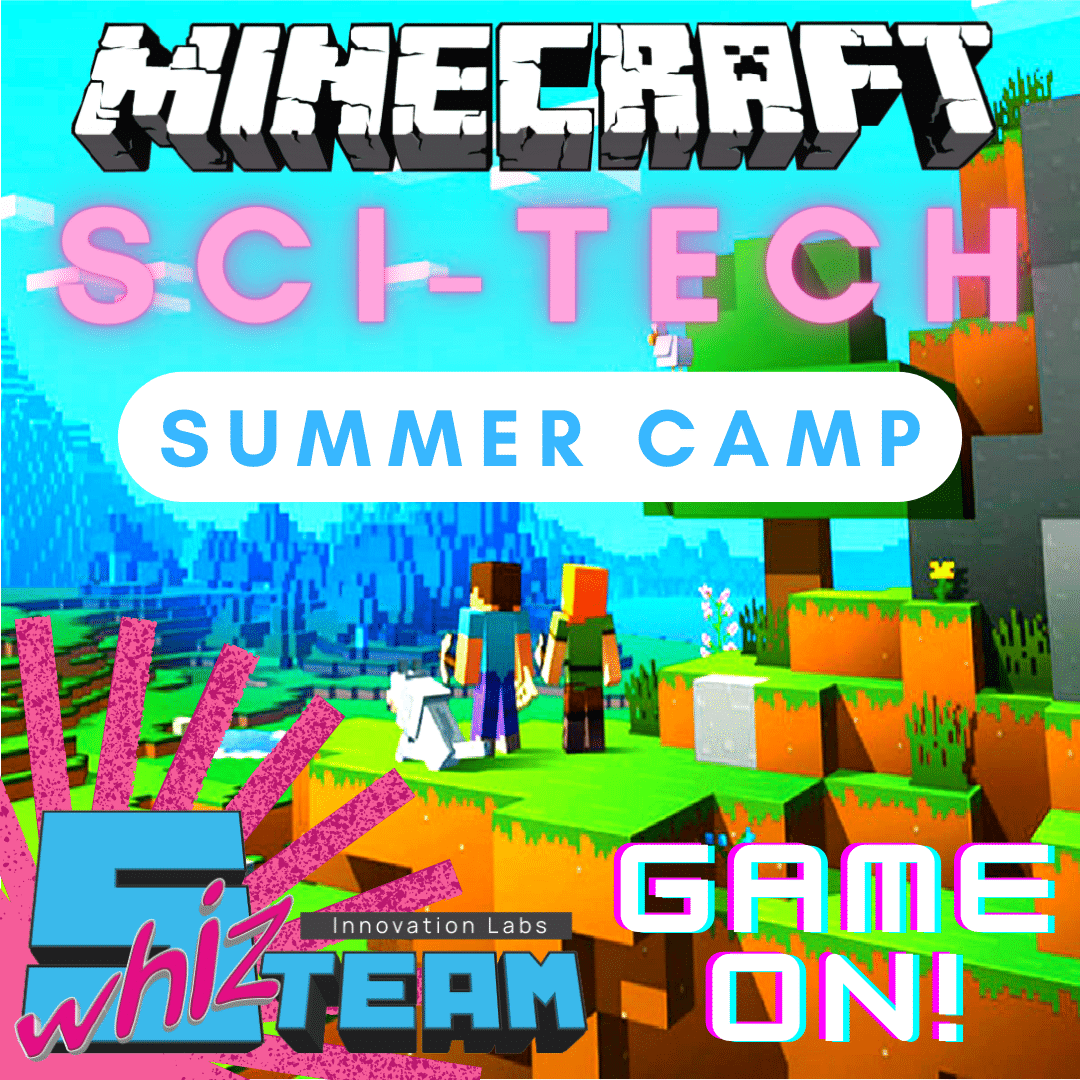
What will your kids be doing this summer? Create, Solve, and Innovate with Science, Design, Coding, & Robotics @ STEAMwhiz’s Minecraft Sci-Tech Summer Camp – Physical to Virtual
STEAMwhiz’s Robo Ecology – Spring Semester 2022 is almost one for the books! The final week of labs is June 13-17th.This past semester SW students took their design, coding, and robotic skills to the next level by creating a self-automated watering system by utilizing CAD & vector art software, Python coding, and advanced physical computing elements & devices. Developing analytical thinkers – the ability to tackle a complex problem by breaking it into specific, workable components – is a core value here at STEAMwhiz. Our Input vs Output: Sensor Squish Lab lab was one of the many hands-on, inquiry labs preparing students for such a large, complex problem. Check out Kiera (below) explaining how robots and automated systems take in information from the physical world and do something in the virtual one!
steamwhiz @ Home | avalilable now!
Flower Box Electronics Add-On
Keep Tinkering & Doing @ home by ordering the Automated Flower Box Electronics.
The STEAMwhiz Flower Box Electronics Kit Add-On will allow your SW student to continue to investigate and experiment with their own Python coded Self-Automated Watering System and grow their plants using code, robotics, and automation. Wanna know the best part? This package includes a re-programmable Raspberry Pi Pico microcontroller, which can then be reprogrammed to be used for other projects in the future!
By popular demand, our Fall 2022 Semester is OPEN for early registration.
STEAMwhiz’s 2022-2023 Academic Year will be using Nature as a Design Partner as we explore and investigate Math, Art, and Coding with Physical Computing.
It’s never too EARLY to prepare your student for THEIR future!
What is physical computing, why is it important, and how is STEAMwhiz empowering the next generation of thinkers & doers?
We are working towards this goal by creating both in-person labs and digital courses (coming Fall/Winter 2022). This means that we are not developing one-off projects but a deep curriculum for students rooted in (S)cience (T)ech (E)ngineering (A)rt (M)ath to provide the fundamental and technical acumen to become the innovative problem solvers of tomorrow.
Read More and discover how the STEAMwhiz is supporting this great endeavor!
Create An Account And Never Miss A Beat With Our In-Person STEM Programs Covering Coding, 3d Printing, Laser Cutting, Robotics, Science, Technology, Engineering, Art, Math (STEAM) And So Much More.
We are gearing up to reach more early education students across the good ol’ US of A in the latter half of 2022 (stay tuned). Our mission is to empower more students with the knowledge to become innovative problem solvers that will prepare them for their future, not our past. Our Co-founder and Program Director Allie and I have worked at all levels of the nation’s education system, from public school teachers to curriculum developers at National Laboratories to doing fundamental research at the highest levels of science in America to working at Fortune 100 companies! We are creating both in-person labs and digital courses (coming Fall/Winter 2022) to pass this knowledge on to the up and coming generations. This means that we are not developing one-off projects but a deep curriculum for students rooted in (S)cience (T)ech (E)ngineering (A)rt (M)ath to provide the fundamental and technical acumen to become the innovative problem solvers of tomorrow. You might ask why STEAM? Well, we believe that these fields have a bright future that will not only provide excellent careers for young students but allow them to be creative in amazing ways and exploits their natural curiosity about the world around them. By tapping into their potential, as early as 6 years old, we believe they will be able to find solutions to the novel and difficult problems they will face in the future!
Physical Computing
An amazing development in the last decade or so is the accessibility of Physical Computing for young students! What is physical computing and why is it important? Well we know computing is related to computers right 😋 let’s give it a bit more of a formal definition
COMPUTING is any goal-oriented activity requiring, benefiting from, or creating computing machinery.
Wikipeda
In other words, it’s the use of a computer to accomplish some goal or task. This typically resides inside of the computer in the virtual world. Some examples are creating a scientific model to predict the weather or writing a blog post like this one 😄
Now we add the word PHYSICAL to the term COMPUTING and we move out of the virtual-only world and interact with the physical ‘real’ world as well.
PHYSICAL COMPUTING involves interactive systems that can sense and respond to the world around them.
This is basically at the heart of all our technology; bridging the human physical world with the virtual technological one! Now imagine the amazing creativity and ingenuity that the next generation of students can explore with these tools at their disposal, if we transform the when, what, and how we teach them!
Raspberry Pi’s
The GP (i.e. General Purpose) are the PINs used for physical Computing
Ok, so how does the Raspberry Pi fit into all of this? The Raspberry Pi is an amazingly powerful, little single-board computer that is relatively inexpensive for students to explore Physical Computing. What makes it different than any other computer? While it is a ‘normal’ computer that can be used to browse the internet, write a document, and code a program, it also has an amazing suite of programs geared for kids to explore computing! Moreover, it has special PINs called General Purpose Input Output PINs (aka GPIO PINs) that allow the Raspberry Pi to connect to sensors, lights, motors, actuators, buzzers, pumps, and so much more. It bridges the physical world into the virtual one like the videos above!
STEAMwhiz Pi
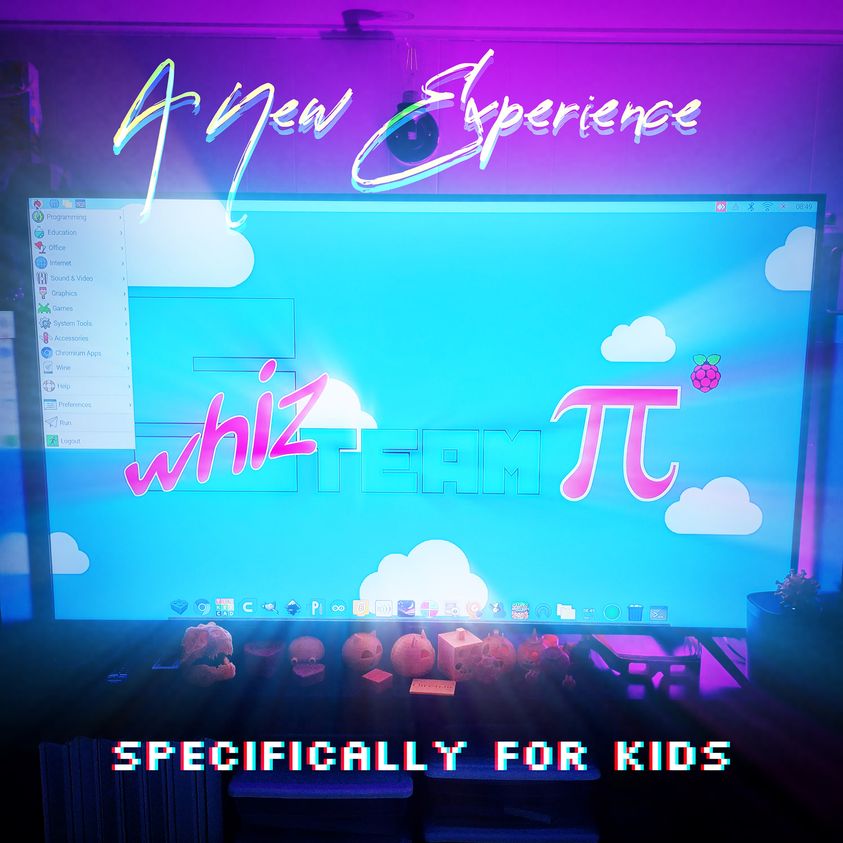
One challenge of the Raspberry Pi is that there is a barrier to entry that requires a certain level of technical understanding to really unlock its power. So what we have done at STEAMwhiz is create a wonderful plug and play solution for parents and students, which we call the STEAMwhiz Pi 😅
The STEAMwhiz Pi (pictured above) is basically an exact clone of what we use in our in-person labs, with a touch screen and the exact software configuration we use to teach our students throughout the academic year! This allows for our students to continue working & innovating at home well after they leave the lab. Bonus they can use it for their school work too, as it’s a full-blown desktop computer!
Isaac putting in the work at home and doing physical computing after lab!
Where is this all going? Well, while there are great tutorials online and fun project boxes, most are not really targeting early education & holistic curriculum development. So it is possible for some very driven students to learn, but it’s mostly geared toward an older audience through standalone disconnected projects. In Q3 & Q4 of 2022, we will begin the rollout of our STEAMwhiz app to deliver STEAM courses specifically targeting early education which will be a full-blown curriculum to provide our decades of experience to students across the country in a fun animated storybook fashion. The STEAMwhiz Pi is the first step so parents can just plug and play a system for their children to begin exploring the world of physical computing! You can learn more about the STEAMwhiz Pi here.
Getting Started in Physical Computing
In the meantime, while we roll out our STEAMwhiz app, we encourage our students and parents to check out the links below to get started in the world of physical computing and get those inquisitive minds working! Feel free to reach out if you have questions or comments and we will be happy to engage.
This tutorial introduces some basic electronic components and how to use a great coding language called Python to control LEDS, buzzers, and more! Python is ubiquitous in research and industry throughout the world and is an excellent first coding language to start out with.
The tutorial above introduces physical computing using a drag and drop visual block coding language known as Scratch. If you are unfamiliar you can read more about it in our other post here. We recommend this for students who can read and write but are just starting to dip their toes into coding.
Once you have gone through the tutorials above you can check out more here fun projects from the Raspberry Pi Foundation.
As we begin to observe the hopeful signs of Spring, this semester STEAMwhiz students will have lots of opportunities to GROW! Check out this month’s newsletter below.
The passion for stretching yourself and sticking to it
Mindset | Growth vs Fixed
How do we develop and support our NextGen ‘Thinkers & Doers’ analytical and critical thinking skills; the tools needed to be successful? Eliminate the fear early and allow our children the time and space to fail and succeed.
Looking for More? Are your kids ready for the 21st century? Check out our immersive year-round in-person programs aimed at forming the innovated problem-solvers of tomorrow.
In the NY Capital District? Get hands-on at our MakerLab with Science + Design + Fabrication tools such as laser-cutter, 3D printers, coding & math, sublimation and heat press tech, CAD design, image creation, vector design software, classic hammer + nails, and more! Make something cool using science, technology, and engineering.
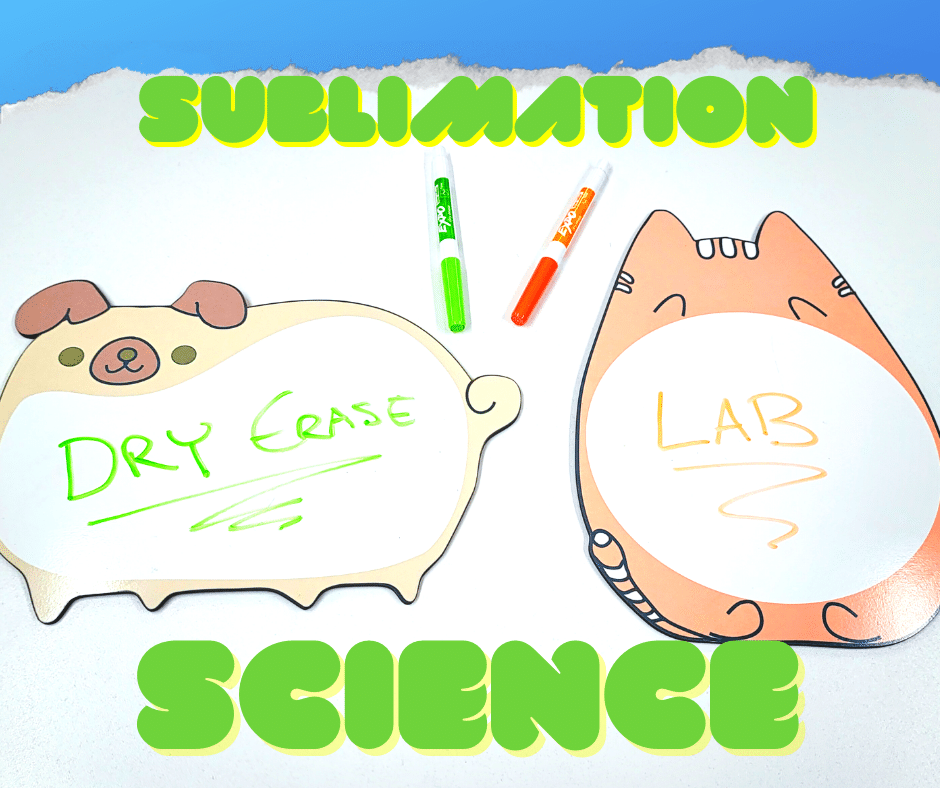
Learn Science + Engineering and create! Choose & laser cut your dry-erase character. Learn to use vector-graphic software to personalize them. Use sublimation technology to transfer your design to the […]
What can be better than designing, building, science, and gardening for Mother’s Day?! Come let your kids get hands-on and make mom something that keeps on giving =D Learn More
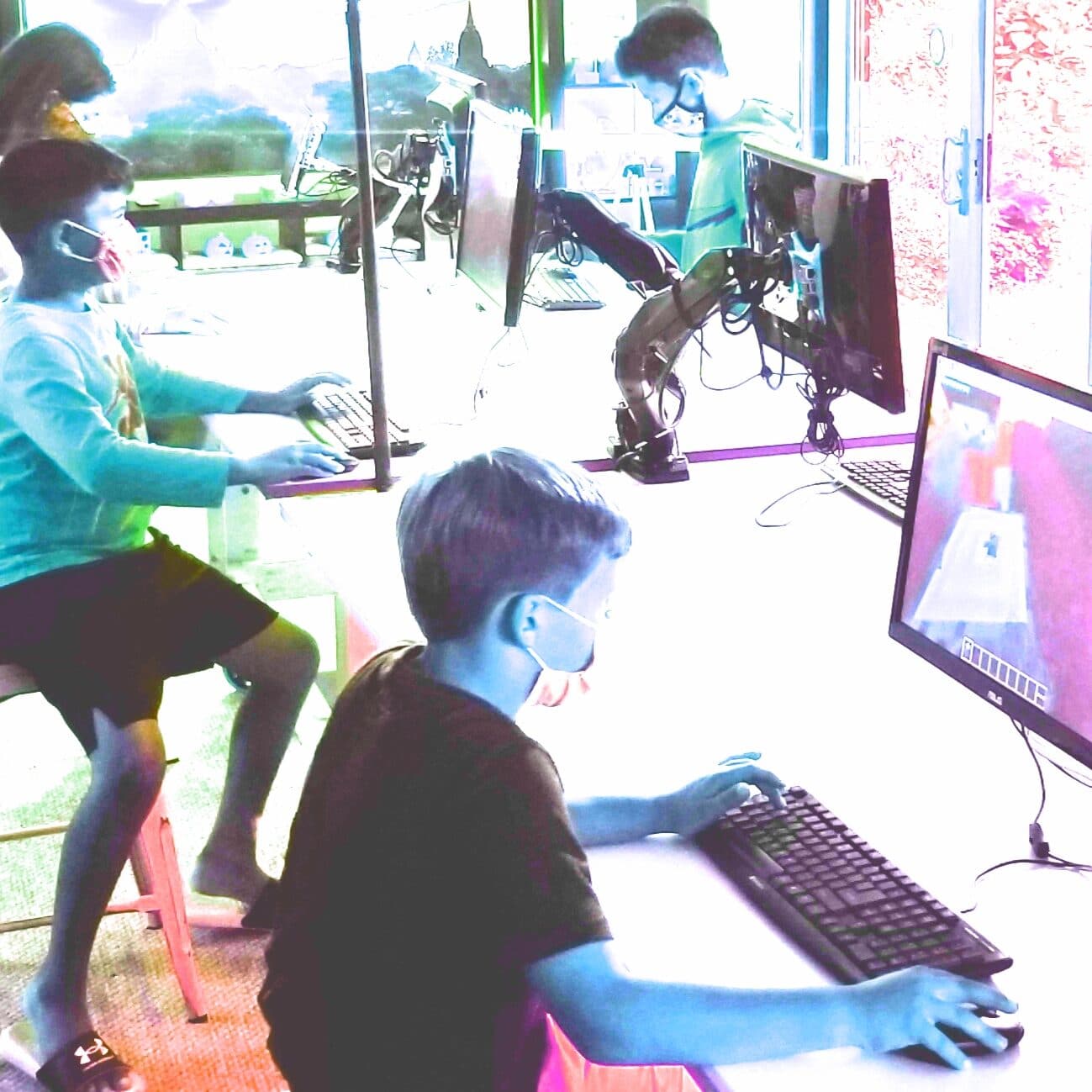
STEAMwhiz Minecraft Team Challenge Night is educational and has a purpose. We combine the social aspect of gaming with educational challenges and problem-solving growth opportunities. Think TEAMWORK, ENGINEERING, STRATEGY, MATH, CODING, etc. A […]
Register TOday
Stay in Sync with STEAMwhiz
Create an account and never miss a beat with our in-person STEM programs covering coding, 3d printing, laser cutting, robotics, Science, Technology, Engineering, Art, Math (STEAM) and so much more.
Growth vs. Fixed Mindset – The passion for stretching yourself and sticking to it, even (or especially) when it feels too hard, feels like it’s taking too much time, or just not going well, is the hallmark of the growth mindset.
How do we cultivate a growth mindset in our children?
How do we develop and support our NextGen thinkers & doers analytical and critical thinking skills; the tools needed to be successful?
Eliminate the fear and allow our children the time and space to fail and succeed. Helping students build their confidence in themselves and their abilities while embracing the idea that failures will lead to opportunities to learn and grow is pivotal! Whoa! That’s huge for 7-year-olds, 10-year-olds, and especially for us adult-crowd.
STEM/STEAM learning experiences offer great opportunities to develop a powerful GROWTH MINDSET! And STEAMwhiz is taking on this challenge as labs are being designed with more exploration time, space for success & failures, and a focus on self-reflection and confidence.
STEM is hard for everyone. Grades ultimately aren’t what matter. Curiosity and perseverance matter. ~ tweeted by Lead Engineer of Blue Origin, Ben Cichy
Growth Mindset Attributes
Taking on Challenges
You look forward to the next challenge.
Learning from Mistakes
You reflect on what you learned from the mistake and apply it to trying again.
Accpeting Feedback
You see criticism as supporting your learning, and you learn from it.
Practicing
You enjoy the process of getting really good at something. You may set your own practice plans.
Perseverance
You “stick to it” and keep working confidently until the task is complete.
Asking Questions
You ask questions of the educator, the task, and most importantly yourself.
What can be better than designing, building, science, and gardening for Mother’s Day?! Come let your kids get hands-on and make mom something that keeps on giving =D
Learn Science + Engineering and create! Choose & laser cut your dry-erase character. Learn to use vector-graphic software to personalize them. Use sublimation technology to transfer your design to the whiteboard.
STEAMwhiz Minecraft Team Challenge Night is educational and has a purpose. We combine the social aspect of gaming with educational challenges and problem-solving growth opportunities. Think TEAMWORK,ENGINEERING, STRATEGY, MATH, CODING, etc. A place for Minecraft players to meet new friends, play, problem-solve, develop new skills, and share an adventure, all while working together to solve the team challenge!
Get ready to bridge the physical world with Minecraft’s virtual world in STEAMwhiz Summer Boot Camp. Physics, Engineering, Designing, Coding, and Robotics will never be the same!
Join the Waitlist!We always strive to serve our students by opening new classes, shifting times, and more. When you join the Waitlist, you'll be notified as soon as a spot becomes available. (We do not sell or use your information for anything other than STEAMwhiz. You can unsubscribe at any time!)